On this page
Separate the result achieved, its official recognition, an athlete’s disclosure and the causal effect of a substance. Those are four different questions, and an event leaderboard answers only part of the first.
Describe the result precisely
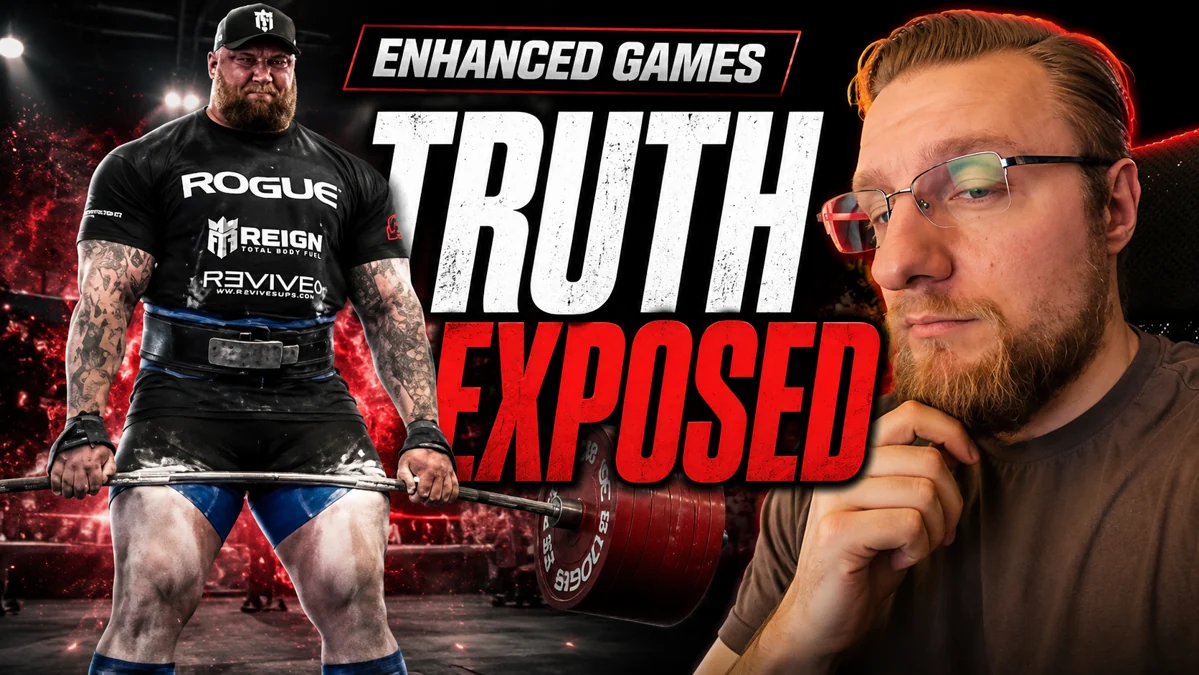
The supplied corrected report, with sources collected through 30 June 2026, describes a field of 42 athletes and one performance faster than the official world-record reference it used. Kristian Gkolomeev’s 20.81 s over 50 m freestyle was compared with 20.88 s. A faster recorded time does not automatically become a ratified world record: rules, equipment and eligibility also matter. The chart is a historical comparison from that report, not a live record table or a claim of official ratification. [1]
Why the event cannot tell us the size of a drug effect
The athletes were not randomly assigned to otherwise comparable enhanced and non-enhanced groups. Their ages, training histories, event specialisation, preparation and previous bests differed. Public disclosures are also not a complete, independently verified record of each participant’s exposure. A self-described non-enhanced athlete winning does not prove that drugs are ineffective. Equally, a winner surpassing a reference time does not identify how much improvement came from a particular substance rather than training, selection, equipment or other conditions. [1]
A faster time—not an isolated drug effect
View the values
| FIGURE | s |
|---|---|
| Event performance | 20.81 |
| Reference in the report | 20.88 |
| Difference | 0.07 |
Controlled evidence answers a narrower question
Bhasin and colleagues’ randomised study compared testosterone or placebo with and without a standardised training programme. It demonstrated that supraphysiological testosterone could increase fat-free mass, muscle size and strength, especially alongside training. That is stronger causal evidence for the studied intervention than an event leaderboard. It is still not a direct estimate of benefits in elite swimming or armwrestling, and fat-free mass must not be treated as identical to pure muscle. This article deliberately does not provide drug-use protocols. [2]
Safety and suspicion require separate evidence
Medical monitoring may detect some problems; it does not establish that a performance-enhancing regimen has a safe upper limit or no long-term consequences. The report explicitly notes incomplete individual exposure and performance-history data. The video’s broader suggestion that all elite athletes must therefore be using drugs is an opinion, not a conclusion supported by these event results. Criticism is strongest when it stays attached to observable facts and clearly states what the comparison cannot resolve. [1, 2]
What this does not tell us
This article evaluates the supplied historical report, not every later development in the event. It does not verify individual drug histories, endorse enhancement or infer undisclosed drug use by named competitors. Reported performances are not automatically officially recognised records.
Source materials
Enhanced Games: corrected reportPDF in English · 15 pagesReferences
Based on the supplied English video transcript and the sources below.
- Armwrestling LAB. (2026). Enhanced Games 2026 — corrected report. Supplied editorial research report. Sources as of 30 June 2026; pages 5, 10, 14–15.
- Bhasin S, et al. (1996). The effects of supraphysiologic doses of testosterone on muscle size and strength in normal men. New England Journal of Medicine. 335:1–7.