RFD: the strength you can use before the match moves on
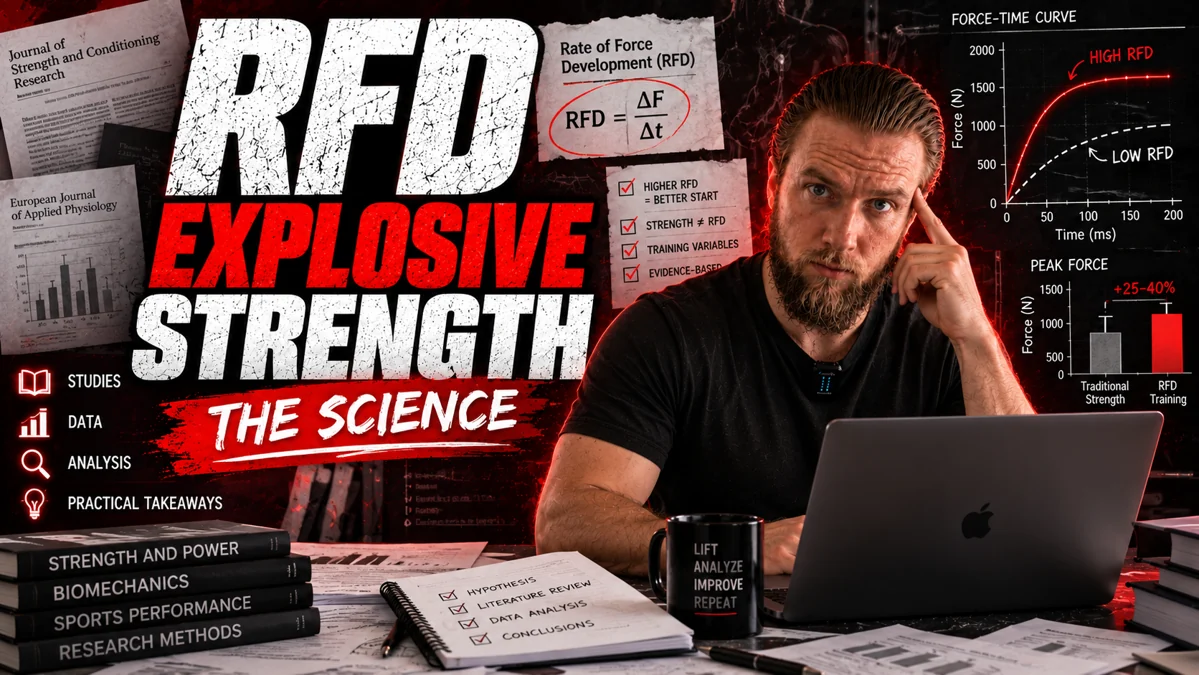
A large maximum is only one part of an armwrestler’s strength profile. The research in the video asks a different question: how much force is available early enough to influence the contest?
RESEARCH / TRAINING / ARMWRESTLING
Go beyond the heaviest lift. Explore the research, understand the mechanisms and bring better questions to the table.
Research-led articles. Clear explanations. Sources you can check.
Search titles, summaries and the full article text.
A large maximum is only one part of an armwrestler’s strength profile. The research in the video asks a different question: how much force is available early enough to influence the contest?
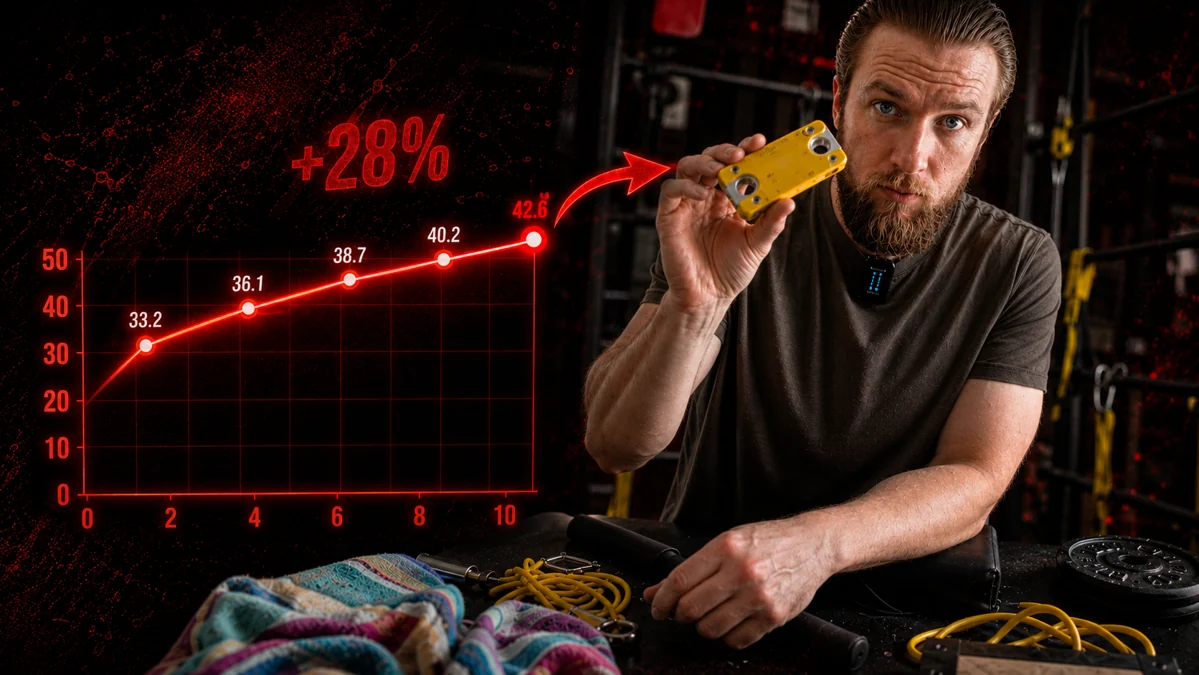
Explosive strength is not just a heavy lift performed with more enthusiasm. The training studies and the channel’s wrist-curl measurements show why intention, test conditions and the chosen time window matter.
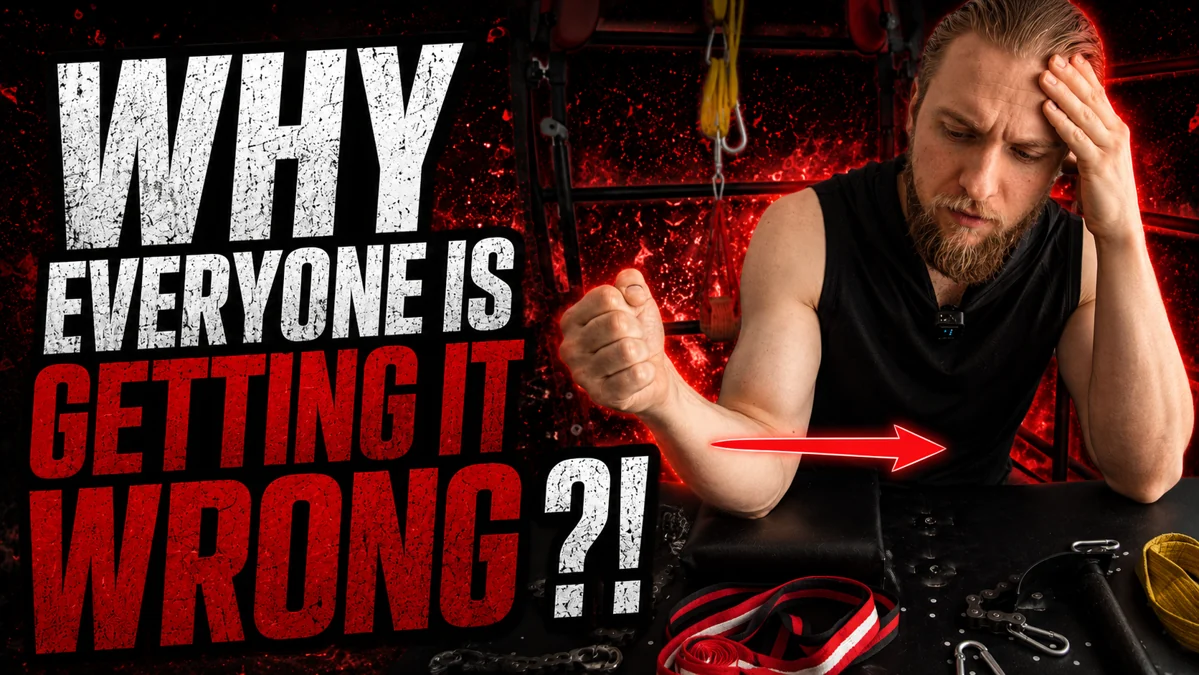
The video challenges a tendon-stiffening claim. The most useful response is not to judge a drill by its appearance, but to ask whether its loading and outcomes were actually measured.
The channel’s two-year experience sits beside several different evidence streams: engineered ligaments, human tendon adaptations and pain studies. Their findings are interesting precisely because they answer different questions.
The final PDF is more nuanced than a simple supplement verdict. It separates amino-acid availability, blood markers and direct tendon outcomes—and asks whether collagen outperforms an appropriate protein comparison.
The film argues against extremes: eating too little, chasing the scale or treating one protein number as the whole diet. Research supports a more useful focus on training, body-mass trends and nutritional adequacy.
Different exercises can load the same elbow and forearm tissues. The film’s strongest point is this hidden overlap—not the claim that a disappointing strength test diagnoses overtraining syndrome.
The video questions how much of an armwrestler’s body weight is useful muscle. FFMI helps organise that discussion, but it cannot measure arm-specific potential or prove how an individual athlete achieved a physique.
A larger number is convincing only when the task stays the same. The film’s discussion of angles, cables and dynamometers is best understood as a lesson in measurement, not a shopping guide.
The term describes a competitive action, not a single anatomical movement. The useful part of the video is its systems perspective; the exercise demonstrations are deliberately not reconstructed here.
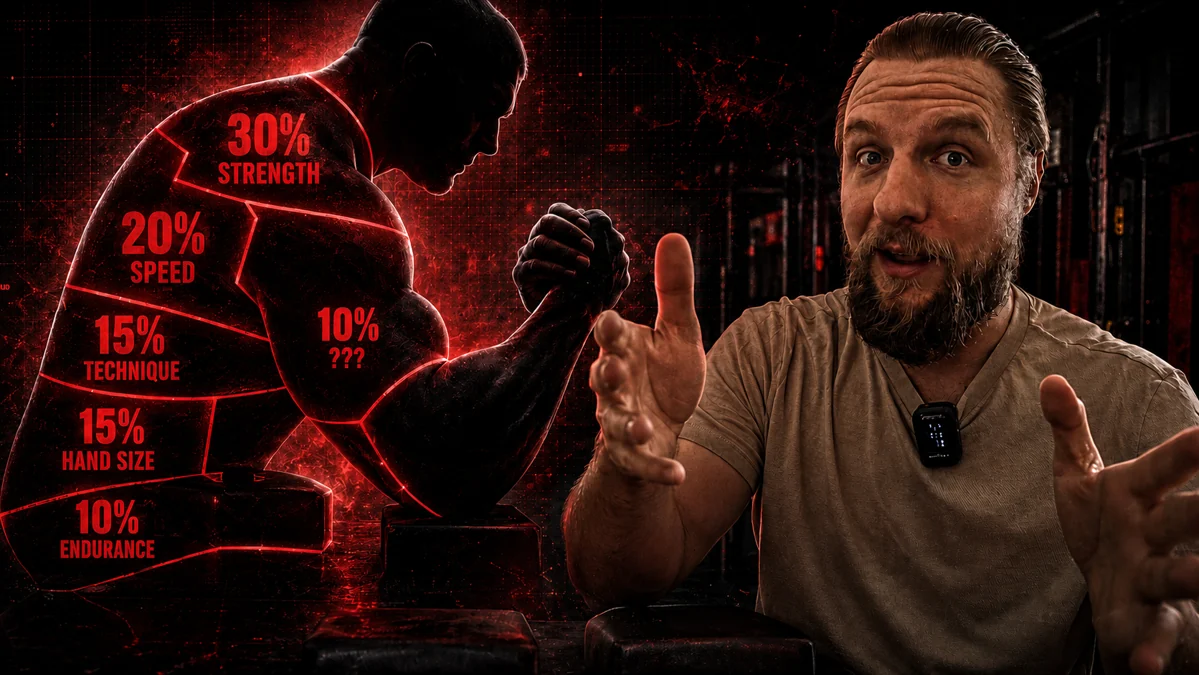
The film brings together muscle, tendons, speed, technique and anatomy. Research supports that broad view, but not fixed percentage contributions or a reliable forecast of a person’s genetic potential.
The corrected report documents performances and public claims from the 2026 event. Its most important scientific lesson is about comparison: event results cannot isolate the effects of performance-enhancing drugs.