On this page
Count the whole training week, including table work. Investigate persistent performance decline, but do not label every tired session or painful elbow “overtraining syndrome”.
Your tissues do not read the exercise names
Pronation work, wrist flexion, pulling exercises and table practice can share muscular demands. A programme may look varied on paper while repeatedly loading the same region. The narration is useful when it asks the athlete to add these exposures together instead of judging each session in isolation. Record not only exercise names but effort, duration, demanding sets and symptoms. This is an organisational tool; it does not produce a validated numerical limit for the elbow or tell us that almost every armwrestler is overtrained. [1]
Use the right term for the right problem
The ECSS/ACSM consensus distinguishes ordinary fatigue and short-term functional overreaching from longer-lasting maladaptation and overtraining syndrome. OTS involves persistent performance impairment and requires consideration of other causes; there is no single accepted diagnostic marker. A low maximum, extra warm-up time or a sore forearm is therefore insufficient. Sleep disruption, inadequate nutrition, illness, psychological stress, local injury and a changed test setup can all alter what the athlete experiences or measures. [1]
From one bad session to a useful decision
Check setup and ordinary day-to-day variation
Review total load, sleep, nutrition and stress
Seek an assessment; do not diagnose OTS from a graph
Monitor trends without turning testing into more fatigue
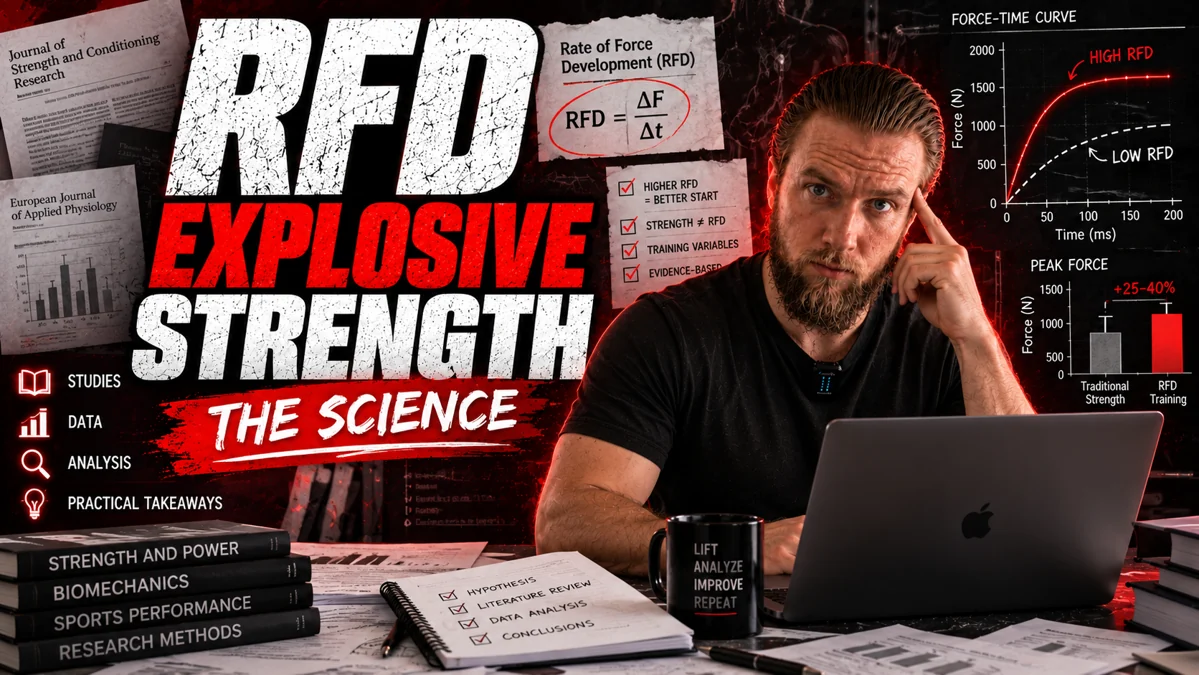
A repeatable submaximal task, training log and symptom record may be more useful than repeatedly forcing a personal best while performance is declining. Choose the same setup and consider several observations, because measurement noise is real. Armwrestling-specific reliability research found maximum-force variables more consistent than RFD variables under its particular protocol. That does not provide a universal alarm threshold, but it warns against treating every small change as evidence of lost fitness. [2, 3]
Respond to the pattern, not to one number
A practical first review is to identify recent increases in load, restore recovery opportunities and check whether the programme matches current capacity. Reducing overlapping demanding work may be sensible, but the appropriate amount and duration are individual. Pain deserves its own assessment: short-term relief from an isometric hold does not prove that further loading is safe. When decline persists despite recovery, or pain, weakness or instability is significant, professional evaluation is more useful than adding another maximal test. [1, 2]
What this does not tell us
The supplied transcript contains personal observations, not prevalence data or a diagnostic study. The article does not estimate how many armwrestlers have OTS and does not prescribe a fixed deload or rehabilitation schedule.
References
Based on the supplied English video transcript and the sources below.
- Meeusen R, et al. (2013). Prevention, diagnosis, and treatment of the overtraining syndrome: joint consensus statement of the European College of Sport Science and the American College of Sports Medicine. Medicine & Science in Sports & Exercise. 45:186–205.
- Clifford C, Challoumas D, Paul L, Syme G, Millar NL. (2020). Effectiveness of isometric exercise in the management of tendinopathy: a systematic review and meta-analysis of randomised trials. BMJ Open Sport & Exercise Medicine. 6:e000760.
- Lakićević M, Dopsaj M, Marković S, Matić M, Klisarić D. (2021). Reliability of specific tests of strength of sports arm wrestling. Facta Universitatis, Series: Physical Education and Sport. 19(1):97–107.